

AI platforms are rapidly becoming part of everyday business conversations but what exactly are they, and why are so many companies investing in them? If you’ve ever wondered how businesses turn data into decisions or automate tasks without starting from scratch, the answer often lies in these platforms.
Rather than being a one-size-fits-all tool, AI platforms offer a flexible foundation for developing intelligent solutions that solve real-world problems. Whether you’re running a retail chain, managing patient records, or handling financial data, these platforms can support smarter workflows and better outcomes.
In this article, we’ll explain what AI platforms are, the different types available, and how they can support your business goals especially when paired with expert support from a consultancy like Miniml.
What Is an AI Platform?
An AI platform is a software system that provides the tools and infrastructure needed to create, train, test, and deploy artificial intelligence or machine learning models. Instead of piecing together individual tools, an AI platform gives developers and data scientists a central environment to work from.
These platforms handle everything from processing raw data to deploying predictive models in real-time applications. They can be used to analyse patterns, forecast outcomes, support automated decisions, and even handle natural language interactions.
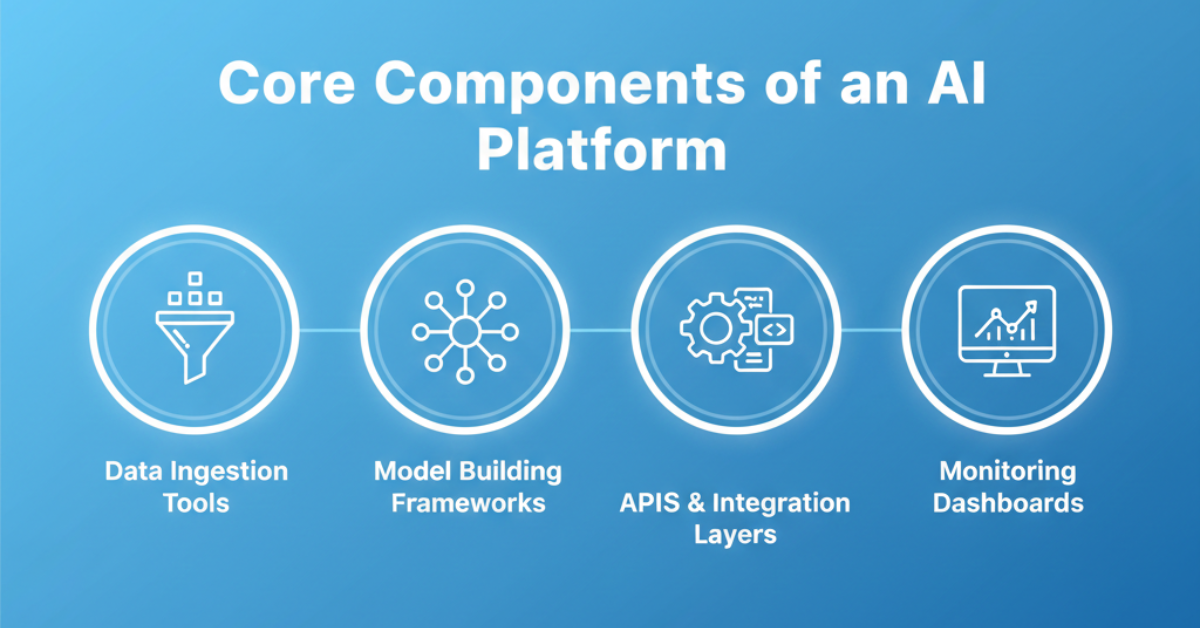
Core Components of an AI Platform:
- Data ingestion tools: To gather and organise structured or unstructured data.
- Model building frameworks: For training, testing, and fine-tuning algorithms.
- APIs and integration layers: So the models can work with existing software systems.
- Monitoring dashboards: For tracking performance, bias, and data drift.
Think of it as a digital lab where machine learning and automation can come to life all under one roof.
Types of AI Platforms
Different business goals call for different tools. Here’s a breakdown of the major types of AI platforms available today:
1. Cloud-Based AI Platforms
These platforms are hosted on major cloud providers like Google Cloud, AWS, or Microsoft Azure. They’re accessible via browser and scale easily with your business needs. Companies often prefer cloud-based systems when they want faster deployment and don’t want to manage physical infrastructure.
Examples:
- AWS SageMaker
- Google Cloud AI
- Microsoft Azure ML
2. On-Premise AI Platforms
For organisations dealing with highly sensitive data or strict compliance requirements, on-premise platforms offer more control. These platforms are installed locally within the organisation’s IT environment.
Industries that prefer this approach include:
- Healthcare
- Banking and insurance
- Defence and public sector
3. Open-Source AI Platforms
Open-source platforms offer freedom, flexibility, and transparency. These are ideal for businesses with in-house data science teams who want to fine-tune every part of the process.
Popular tools:
- TensorFlow
- PyTorch
- Hugging Face
- MLflow
What Can Businesses Do With AI Platforms?
AI platforms are not just technical tools they solve business problems across sectors. With the right data and use case, these platforms can automate processes, personalise experiences, and support smarter decision-making.
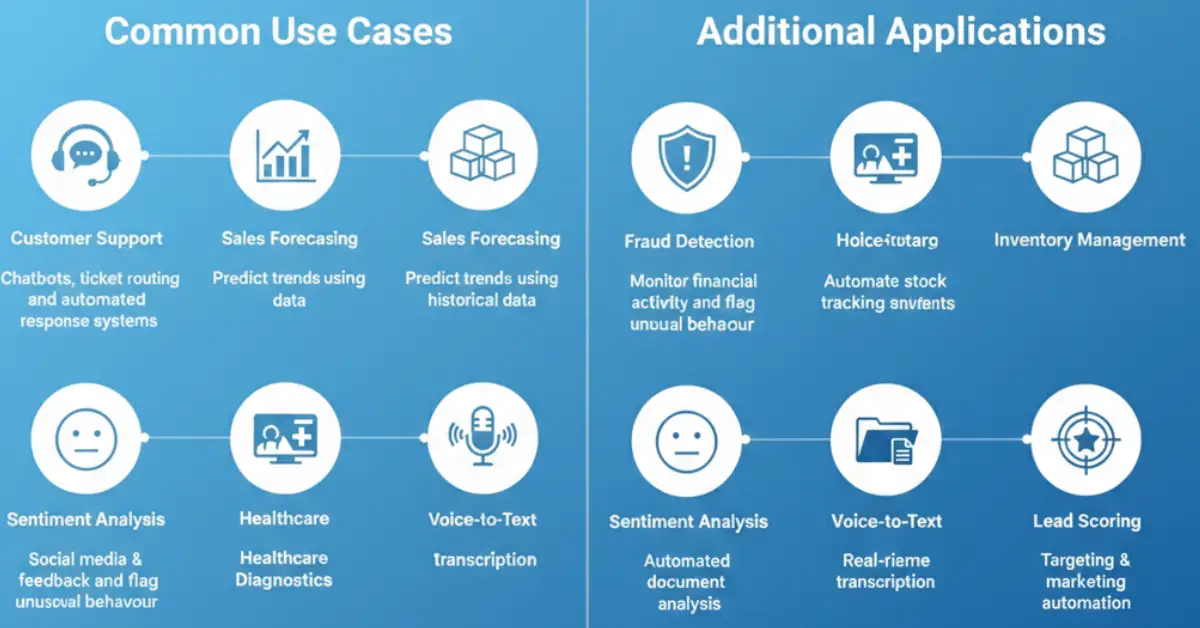
Common Use Cases:
- Customer Support: Chatbots, ticket routing, and automated response systems
- Sales Forecasting: Predict trends using historical data
- Inventory Management: Automate stock tracking and replenishment
- Fraud Detection: Monitor financial activity and flag unusual behaviour
- Healthcare Diagnostics: Support radiologists with image analysis tools
Additional Applications:
- Voice-to-text transcription
- Real-time sentiment analysis
- Automated document classification
- Lead scoring and marketing automation
How AI Platforms Differ from Traditional Software
Unlike conventional software, which runs on static code, AI platforms learn from data. They’re dynamic systems that adjust their behaviour based on patterns and feedback.
Here’s how they stand apart:
- Adaptive systems: AI models adjust as new data becomes available.
- Probabilistic output: They deal in likelihoods, not certainties.
- Data-first design: Traditional tools run on rules; AI platforms depend on data volume and quality.
This distinction makes AI more suitable for tasks involving ambiguity, prediction, and large datasets things that traditional software struggles with.
Benefits of Using AI Platforms in Business
Businesses use AI platforms to create real value whether by reducing repetitive work or turning raw data into usable insights. Below are the practical benefits you can expect.
Key Advantages:
- Faster project development: No need to build everything from scratch.
- Improved accuracy: Models trained on historical data improve performance over time.
- Better decision-making: Access to predictive analytics leads to more informed choices.
- Seamless integration: APIs and connectors allow easy alignment with CRMs, ERPs, and custom tools.
Business Impact:
- More time spent on strategy, less on manual tasks
- Data-driven culture across departments
- Better customer engagement through personalised services
Challenges to Consider
While AI platforms offer a lot, they also come with complexity. Businesses should be aware of the common pitfalls before investing heavily.
Challenges Include:
- Data Quality: Poor input data leads to unreliable outcomes.
- Privacy and Compliance: Sensitive data must meet regulations like GDPR or HIPAA.
- Bias and Fairness: Biased training data can result in unfair model predictions.
- Skilled Talent Gap: Not every organisation has in-house data scientists or ML engineers.
- Integration with Legacy Systems: Connecting old infrastructure to modern tools can be a hurdle.
Planning ahead for these challenges either internally or with help from a consultancy can improve project success rates significantly.
How to Choose the Right AI Platform
With so many options, it’s important to pick a platform that aligns with your business goals and team capabilities.
Key Questions to Ask:
- What problems are we trying to solve?
- What types of data do we have access to?
- Do we need real-time processing or batch-based analysis?
- Will we manage this in-house or work with a partner?
- What level of control, security, and compliance is needed?
Factors to Compare:
- User experience and interface
- Model transparency and explainability
- Pre-built templates or libraries
- Third-party integrations
- Support and documentation
Starting small and scaling gradually is often the safest route for businesses entering the space.

Why Work with Miniml?
Based in Edinburgh, Miniml specialises in helping businesses build intelligent systems that are both practical and reliable. We don’t believe in copy-paste solutions. Instead, we work closely with clients to create strategies that match their needs, capabilities, and long-term vision.
What We Offer:
- Tailored language model deployments
- Process automation and integration
- Privacy-conscious solutions for regulated industries
- End-to-end support from proof of concept to production
With experience across finance, retail, healthcare, and education, we understand the unique challenges of different industries and how to build AI platforms that support them effectively.
Final Thoughts
AI platforms have changed the way businesses work. They’re not just for tech giants or research labs they’re accessible, powerful tools that help solve practical problems every day.
The key is using them intentionally. That means identifying the right use case, choosing a platform that fits your goals, and partnering with the right experts when needed.
At Miniml, we make these decisions easier and the outcomes more reliable. If you’re curious about how an AI platform could support your business, we’re here to help.