

In today’s tech-driven world, digital assistants have become more than just novelty tools they’re dependable resources that help businesses and individuals manage their daily routines with minimal effort. But what exactly is a virtual AI assistant? How do they work behind the scenes, and why are so many companies integrating them into their operations?
Let’s explore the technology, real-world applications, and practical implications of virtual AI assistants, especially for organizations looking to stay ahead in a competitive market.
The Basics of Virtual AI Assistant
A virtual AI assistant is a software-based agent that can perform tasks or services based on commands, queries, or interactions. Unlike basic scripted bots that follow predefined flows, AI-based assistants learn from data, understand context, and provide responses or actions in a human-like way.
They are used in mobile apps, customer service platforms, websites, internal tools, and smart devices, interacting through voice or text. What makes them stand out is their ability to learn, adapt, and understand natural language rather than relying solely on strict command formats.
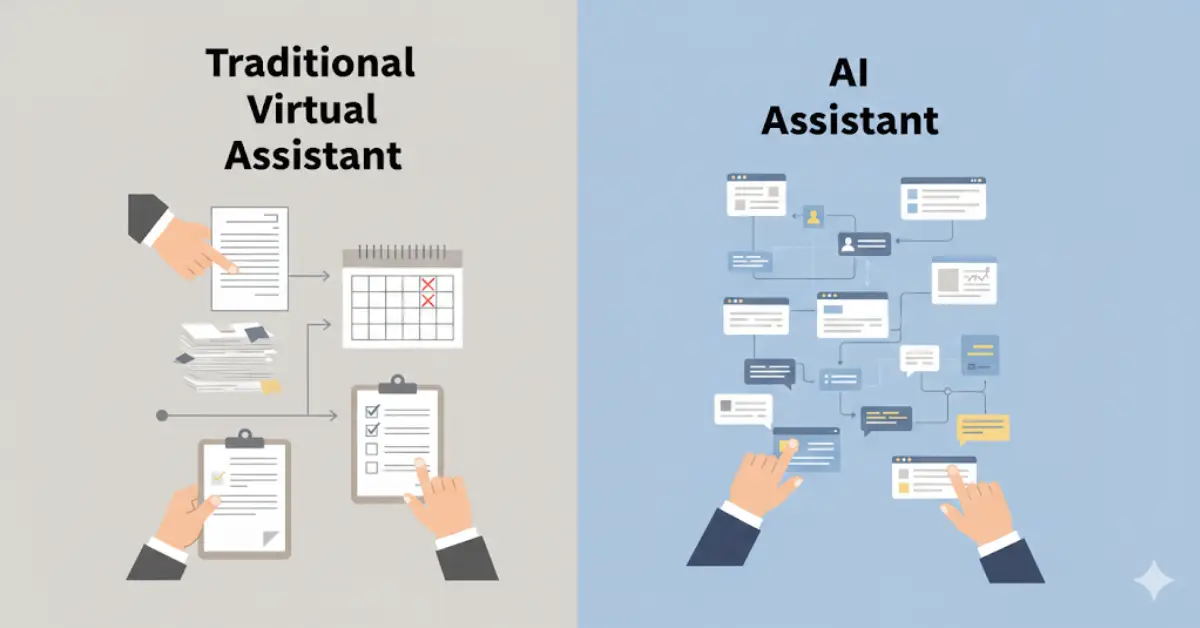
How Are They Different from Traditional Virtual Assistants?
Traditional assistants like early chatbots or voice recognition tools follow simple rules. If you ask the wrong question or phrase something unusually, they often fail. Virtual AI assistants, by contrast, can:
- Understand intent beyond keywords
- Hold contextual conversations
- Learn from past interactions
- Integrate with various tools and services
This makes them more useful, more accurate, and more personalized.
How Virtual AI Assistants Work
At a high level, a virtual AI assistant follows a three-stage process:
- Understanding the Input
The assistant listens to or reads what the user says. Using natural language processing (NLP), it identifies key terms and the intent behind the message. - Processing and Deciding
It analyzes the request using pre-trained models and contextual memory. If needed, it fetches data or performs tasks in the background. - Responding or Taking Action
The assistant generates a response using natural language generation or triggers a system action such as sending a report, booking a meeting, or providing an answer.
This loop of input-processing-output allows for smooth human-computer interaction, often making it feel like you’re speaking to a real person.
Why Businesses Are Turning to Virtual AI Assistants
The benefits of using virtual assistants go far beyond just automating responses. Here are some real, tangible advantages companies experience:
1. Around-the-Clock Availability
Unlike human agents, virtual assistants don’t need sleep or breaks. They can handle queries at any hour, which is crucial for businesses with global audiences.
2. Consistent Customer Service
Every customer gets a standard, well-structured response, ensuring no one is left confused or misinformed.
3. Reduction in Operational Load
They handle repetitive queries, freeing up your staff to focus on complex, creative, or high-priority issues.
4. Better Customer Experience
Many assistants personalize answers using prior user data, improving the overall experience.
Where They Are Used: Industry Examples
Virtual AI assistants aren’t confined to a single industry. Their flexible nature allows them to be implemented across various fields.
Healthcare
- Answering patient queries about symptoms
- Booking appointments
- Sending post-care instructions
- Assisting in mental health check-ins
Finance
- Helping users with account balances or transactions
- Providing spending summaries
- Alerting unusual activity or potential fraud
Retail
- Offering personalized product recommendations
- Tracking orders and delivery status
- Managing returns or complaints
Education
- Answering course-related questions
- Assisting with registration or deadlines
- Offering tutoring support for specific topics
Each of these examples shows how virtual assistants reduce friction and improve day-to-day processes, often acting as the first line of support.

Are Virtual Assistants Safe to Use?
Security is a valid concern, especially when dealing with confidential or personal information. Reliable assistants are designed with safeguards in place, such as:
- Data Encryption: Protects conversations and stored information
- Role-Based Access: Prevents unauthorized users from accessing data
- Compliance Protocols: Adheres to regulations like GDPR, HIPAA, and other local data laws
Businesses must choose solutions that prioritize security and regularly update their models and protocols to address new risks.
Limitations and Ongoing Challenges
Despite their growing capabilities, virtual AI assistants aren’t flawless. Several limitations are worth considering:
- Misinterpretation of Requests: Complex or emotionally nuanced queries can still cause confusion
- Dependence on Training Data: A poorly trained assistant may give biased or irrelevant responses
- Lack of Emotional Understanding: Empathy, humor, and sarcasm are difficult for machines to replicate
- Language Barriers: Multilingual support is improving, but not perfect across dialects
These challenges highlight the importance of expert implementation and continuous monitoring.
The Future Outlook: What’s Next?
As the underlying models improve, virtual assistants will evolve far beyond their current capabilities. Emerging trends include:
- Proactive Assistance: Instead of waiting for input, assistants may suggest actions based on patterns (e.g., reminding you of routine tasks or anticipating requests)
- Emotionally Aware Interfaces: Using voice tone or text cues to detect moods and adjust responses accordingly
- Integration with Emerging Interfaces: VR, AR, and gesture-based tools could change how we interact with assistants
These developments aim to make virtual assistants even more relatable and intuitive.
How Miniml Builds Smarter Virtual Assistants
At Miniml, we create tailor-made virtual assistant solutions that work seamlessly with your existing systems and workflows. Unlike generic plug-and-play tools, we build assistants trained specifically for your business and industry, whether it’s patient support in healthcare, customer service in e-commerce, or data analysis in finance.
Why Partner with Miniml?
- Custom NLP models designed for your domain
- Integration into internal tools (Slack, CRMs, dashboards)
- Secure and scalable deployments
- UK-based team with real-world experience in enterprise AI
- Focus on practical results, not just fancy tech
We don’t just install software. We work closely with your team to understand your workflows and ensure your assistant actually makes your work easier not more complicated.

Conclusion
So, what is a virtual AI assistant? At its core, it’s a software tool that understands human input, completes tasks, and interacts with users naturally. Its real power lies in its adaptability and usefulness across industries, from healthcare to retail to finance.
As technology progresses, these assistants will become smarter, more helpful, and more deeply woven into everyday business. Whether you’re looking to improve customer support, handle internal queries, or automate tasks, a virtual AI assistant could be a valuable step forward.