

Large Language Models (LLMs) have become a core part of many digital systems. From customer support bots to legal document summarizers, these models are now being used in practical business settings every day. But how do these general-purpose models adapt to specific industries or tasks? That’s where fine-tuning comes in.
This guide breaks down the concept of fine-tuning, how it works, and how companies like yours can benefit from tailoring LLMs to meet business needs.
What Is Fine Tuning?
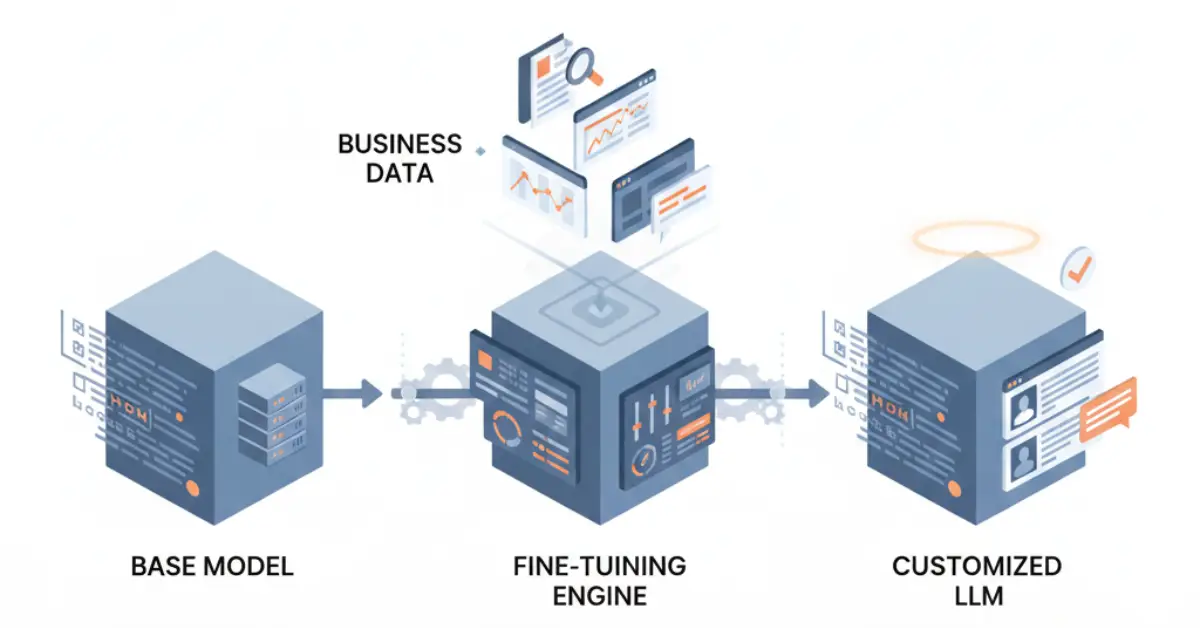
Fine-tuning refers to the process of taking a pre-trained large language model and training it further on a specific dataset. The idea is simple: while a general LLM knows a lot about a wide range of topics, it might not perform well in niche domains like tax law, clinical medicine, or technical customer support.
By training the model further on relevant data, fine-tuning makes it better suited to the vocabulary, tone, and accuracy demands of a given task.
Pre-training vs. Fine-tuning
It’s important to distinguish fine-tuning from pre-training.
- Pre-training: This is the original process where a model learns from a massive dataset (like books, web content, or research papers) to understand general language patterns.
- Fine-tuning: This is a second round of training done on a smaller, domain-specific dataset to align the model’s responses to a specific context.
Why Businesses Fine-Tune LLMs
Most companies don’t need to train a model from scratch. Pre-trained models already understand sentence structure, grammar, and common sense reasoning. But fine-tuning helps mold them into something far more useful for daily operations.
Key Reasons for Fine-Tuning:
- Improve relevance in industry-specific tasks
- Control tone, vocabulary, and style
- Reduce errors in niche contexts
- Comply with strict regulatory or legal frameworks
- Increase confidence in customer-facing responses
Let’s say you run a financial advisory firm. A general model might misunderstand or oversimplify investment language. A fine-tuned model trained on your firm’s documents, FAQs, and reports would perform with far more accuracy.
Types of Fine-Tuning Methods
Not every business needs the same approach. Some need full control, while others want lightweight customizations that are affordable and fast.
1. Full Fine-Tuning
This method retrains all the model parameters using your dataset. It provides maximum flexibility but comes at a high cost in terms of computing and development time. It’s usually best for large enterprises or research institutions.
2. Parameter-Efficient Fine-Tuning (PEFT)
PEFT techniques allow you to fine-tune only a small part of the model. These include:
- LoRA (Low-Rank Adaptation)
- Adapters
- Prefix or Prompt Tuning
These methods significantly reduce computing requirements and make fine-tuning more accessible for small and medium-sized companies.
3. Instruction and Task-Based Tuning
- Instruction Tuning helps LLMs follow natural-language instructions better.
- Task-Specific Tuning trains the model for one job, such as contract review, content summarization, or technical support.
How Fine-Tuning Works (Step-by-Step)
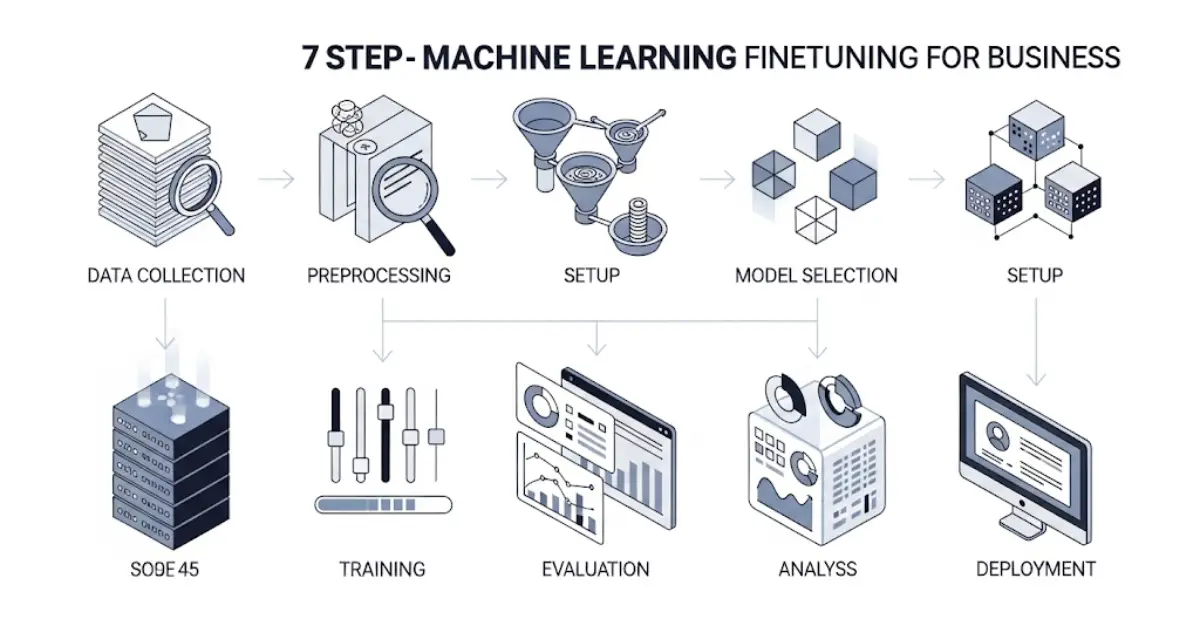
If you’re thinking about fine-tuning a model for your business, here’s a high-level overview of the process:
- Data Collection
Gather domain-specific documents such as customer chats, internal reports, or knowledge base articles. - Data Preprocessing
Clean the data. Remove confidential info, fix formatting issues, and convert it into a format suitable for training. - Model Selection
Choose a base model such as LLaMA, Mistral, or GPT-based models. Consider whether you need open-source flexibility or hosted convenience. - Fine-Tuning Setup
Set learning rates, batch sizes, and evaluation metrics. This step depends on the model size and quality of your dataset. - Training
Run the training on your dataset. For PEFT methods, this step is much faster and cheaper. - Testing and Evaluation
Check model responses for accuracy, tone, consistency, and safety. - Deployment
Integrate your fine-tuned model into business tools from CRMs to customer chatbots or internal dashboards.
Benefits of Fine-Tuned LLMs in the Real World
Fine-tuning helps businesses go beyond generic answers and build solutions that feel more human and reliable.
Real-World Advantages:
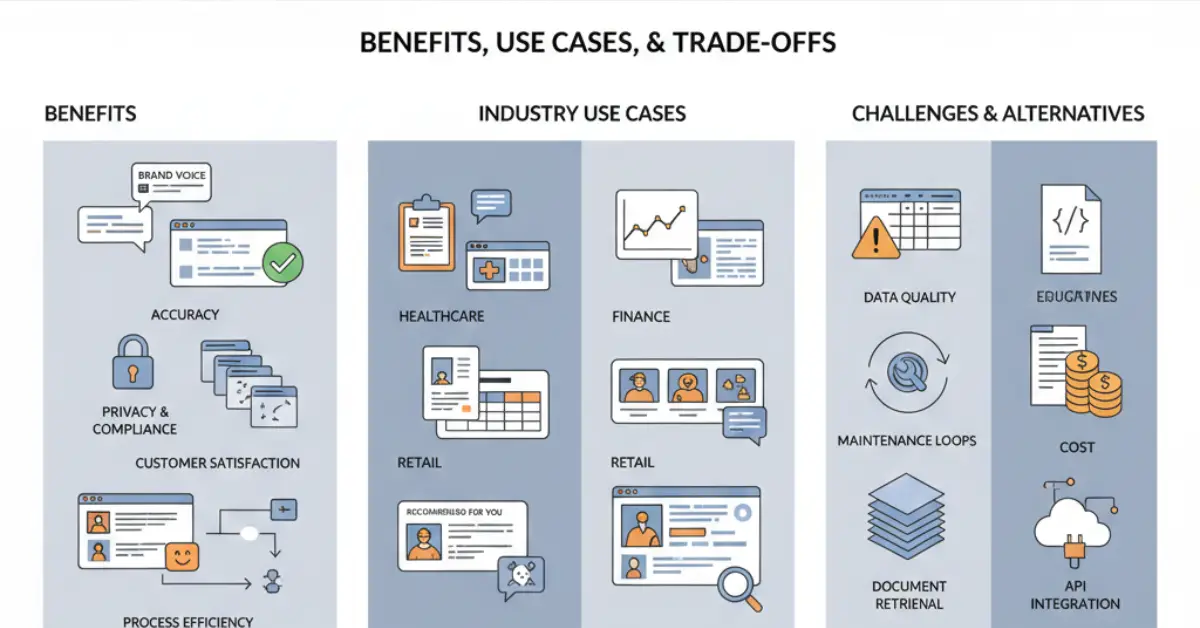
- Consistent Brand Voice: The model speaks like your team would
- Better Accuracy: Fewer off-topic or misleading outputs
- Privacy and Compliance: Models can be fine-tuned using anonymized internal documents
- Higher Satisfaction: Customers get responses that feel more natural and helpful
- Process Efficiency: Fine-tuned models often need less post-processing or manual checking
Industry-Specific Use Cases
Different sectors have unique needs, and fine-tuned LLMs are already delivering strong results across various industries.
Healthcare
- Clinical note summarization
- Symptom-to-diagnosis support
- Patient chatbot assistants
Finance
- Parsing financial statements
- Risk analysis
- Automated report generation
Retail
- Customer support automation
- Product recommendation engines
- Voice assistant integration
Education
- Essay grading tools
- Language practice bots
- Personalized tutoring assistants
What Are the Challenges?
While fine-tuning can deliver value, it also brings technical and operational risks that businesses should consider.
Common Challenges:
- Quality of Training Data: Poor data leads to poor results
- Overfitting: The model might memorize responses without learning real context
- Maintenance: Fine-tuned models need to be updated regularly
- Security: Handling proprietary data during training must follow strict data protection protocols
- Cost: Full fine-tuning requires significant computing power
Working with an experienced team helps avoid these pitfalls and ensures the model performs reliably.
Are There Alternatives to Fine-Tuning?
Yes. Sometimes you don’t need to fine-tune at all.
Other Options:
- Prompt Engineering: Crafting better prompts to steer the base model
- RAG (Retrieval-Augmented Generation): Feeding real-time external documents at runtime
- API Usage: Using cloud-based LLMs (like GPT-4) with context prompts
These are ideal for smaller or temporary use cases.
How Miniml Can Help You Build a Custom LLM
At Miniml, we support businesses in building tailored AI solutions that deliver practical value. Whether you’re exploring basic LLM integration or deep fine-tuning with custom data, we offer:
- Guidance on selecting the right model architecture
- Support with data preparation and privacy handling
- Training, testing, and performance tuning
- Deployment into your existing tools and infrastructure
From Edinburgh, we serve clients across the UK and globally across healthcare, education, finance, and retail.
Final Thoughts
Fine-tuning takes a powerful general-purpose language model and adapts it to your exact business context. It can make your systems smarter, your operations smoother, and your customer interactions more effective.
As models grow more capable and data becomes more central to business success, fine-tuning LLMs is emerging as a practical way to stay ahead.