

Artificial intelligence has become essential infrastructure for enterprises worldwide. In 2026, the question is no longer whether to adopt AI but which platforms can scale reliably, integrate with existing systems, and meet strict governance requirements.
According to Gartner, 40% of enterprise applications will include task-specific AI agents by the end of 2026. This rapid growth means choosing the right AI software has become a strategic decision that directly impacts competitive positioning.
What Makes AI Software Enterprise-Ready?
Enterprise-grade AI differs significantly from consumer tools. The stakes are higher when AI operates at organizational scale, touching sensitive data, regulated processes, and mission-critical workflows.
Before evaluating specific platforms, consider these essential criteria:
- Scalability: Can the platform handle thousands of users and millions of transactions without performance issues?
- Security and Compliance: Does it support encryption, role-based access, audit trails, and regulations like GDPR or HIPAA?
- Integration: How well does it connect with your existing CRM, ERP, and data systems?
- Model Flexibility: Can you switch between AI providers as capabilities evolve?
Top 10 AI Softwares for Enterprises in 2026
1. Microsoft Azure AI
Microsoft Azure AI remains the top choice for enterprises already using Microsoft tools. The platform combines Azure Machine Learning, Cognitive Services, and Azure OpenAI Service with direct integration into Microsoft 365 and Teams.
- Native Microsoft Copilot integration for productivity automation
- Access to GPT-4 models through enterprise-grade infrastructure
- Over 400 pre-built connectors through Power Automate
- Strong identity management via Azure Active Directory
2. Google Cloud Vertex AI
Vertex AI serves as Google Cloud’s unified machine learning platform. The 2026 updates have strengthened its Agent Builder capabilities, allowing enterprises to create sophisticated AI agents with minimal code.
- Access to Gemini models with multimodal capabilities
- Integrated MLOps pipeline for model management
- Seamless connection with BigQuery and Google Workspace
- Strong performance for analytics and RAG implementations
3. IBM watsonx
IBM watsonx positions itself as the enterprise AI platform for regulated industries. Built around three core components, it addresses compliance challenges that healthcare, finance, and government organizations face daily.
- Built-in governance tools for model transparency and bias detection
- Support for hybrid and multi-cloud deployments including on-premises
- Modular architecture allowing selective adoption of features
- Strong natural language processing refined over years of enterprise use
4. Amazon SageMaker and Bedrock
AWS offers two complementary services covering the full spectrum of enterprise needs. SageMaker handles the complete ML lifecycle while Bedrock provides managed access to foundation models from multiple providers including Anthropic and Meta.

- Model choice flexibility through Bedrock’s multi-provider approach
- Deep integration with Lambda, DynamoDB, and S3
- Enterprise-grade scalability on proven AWS infrastructure
- Comprehensive security including VPC support and encryption
5. Salesforce Einstein and Agentforce
Salesforce has embedded AI throughout its CRM ecosystem. The 2026 introduction of Agentforce extends these capabilities with autonomous AI agents handling complex customer service workflows.
- Native integration across Sales Cloud, Service Cloud, and Marketing Cloud
- Predictive analytics trained on extensive CRM data patterns
- AI-generated content for emails and customer communications
- Low-code agent building for non-technical teams
6. OpenAI Enterprise (ChatGPT Enterprise)
ChatGPT Enterprise now offers capabilities specifically designed for large-scale organizational deployment. The platform provides access to latest GPT models with security controls and no training on company data.
- Unlimited, faster access to GPT-4 class models
- Enterprise SSO, domain verification, and analytics dashboards
- Extended context windows for complex analysis
- API credits included for custom integrations
7. Anthropic Claude for Business
Claude has earned recognition for thoughtful responses and strong performance on complex reasoning tasks. Anthropic’s enterprise offerings focus on safety, reliability, and responsible AI deployment.
- Extended context window for lengthy document and codebase analysis
- Constitutional AI approach reducing harmful outputs
- Strong performance on legal, compliance, and research tasks
- API flexibility for custom enterprise applications
8. Palantir AIP
Palantir AIP integrates large language models directly with operational data and decision-making systems. Rather than functioning as a standalone tool, AIP embeds intelligence into existing enterprise software.
- Deep integration with Foundry data platform
- Ontology-based approach connecting AI to real business entities
- Strong fit for defence, government, and regulated industries
- Focus on actionable insights rather than conversational interfaces
9. UiPath with AI Center
UiPath has evolved from pure robotic process automation into a comprehensive platform with sophisticated AI capabilities. The AI Center allows enterprises to deploy machine learning models that work seamlessly with existing automation.
- Combines process automation with document understanding
- Pre-trained models for common tasks like invoice processing
- Easy AI integration into existing RPA workflows
- Strong governance and version control for deployed models
10. Databricks Mosaic AI
Databricks has become essential infrastructure for data engineering teams. Mosaic AI extends this into comprehensive AI development with unique capabilities around data lakehouse architecture.
- Unified approach to data engineering and AI development
- Support for building, fine-tuning, and deploying custom models
- MLflow integration for experiment tracking
- Strong collaboration features for data science teams
How to Choose the Right Platform
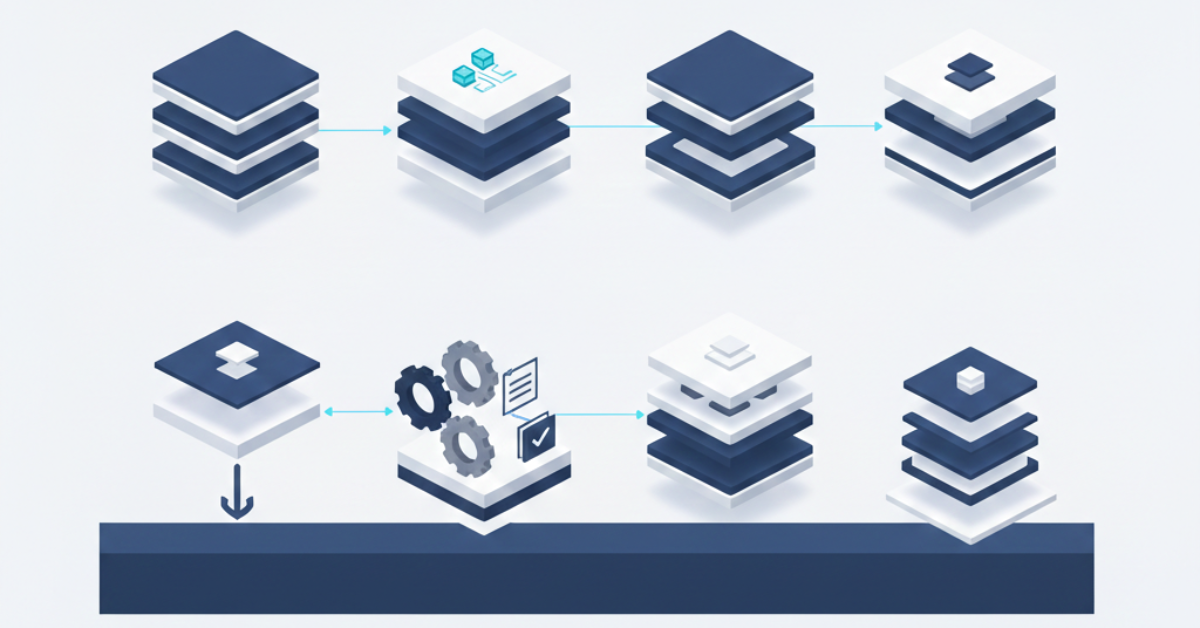
Selecting between these platforms requires honest assessment of your organization’s specific context. Here are practical considerations:
- Follow your existing tech stack. Microsoft shops benefit most from Azure AI. AWS organizations will find SageMaker and Bedrock integrate fastest.
- Match capabilities to problems. Document your specific use cases before evaluating platforms.
- Plan for governance. Regulated industries should prioritize IBM watsonx or Palantir AIP.
- Stay flexible. Choose platforms offering multi-model support to avoid vendor lock-in.
Moving Forward With Enterprise AI
Enterprise AI adoption in 2026 is not about finding one perfect platform. Most organizations will deploy multiple AI solutions across different departments, requiring coherent strategy that aligns technology with business goals.
At Miniml, we help enterprises across healthcare, finance, retail, and education design and implement custom AI strategies that deliver measurable results. Whether you’re evaluating platforms or scaling existing deployments, our Edinburgh-based team brings the technical expertise and strategic perspective to make AI work for your specific needs. Contact Miniml today to discuss your enterprise AI strategy.