

Data science consulting rates depend on the pricing model, the seniority of the team, the state of your data and how much of the work must run in production. Hourly and day rates suit small, open tasks. Fixed scope and retainers suit defined outcomes. Before you compare quotes, compare what each data science consulting engagement actually hands over at the end.
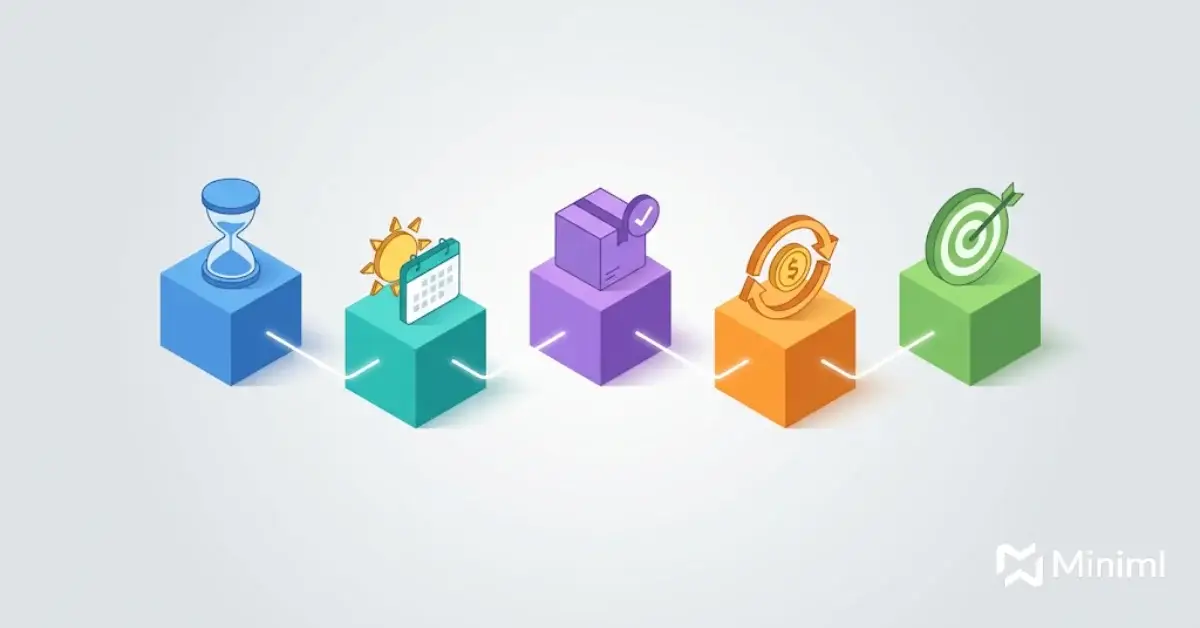
Key Takeaways on Data Science Consulting Rates
- The pricing model shapes your risk more than the headline number. Fixed scope moves risk to the consultant, hourly keeps it with you.
- Data quality, integration work and production requirements drive most of the data science consultant cost, not the modeling itself.
- Every stage should produce something you can keep: an audit, a model, a pipeline, a dashboard or documentation.
- Judge data science consulting rates by what still runs after handover, not by hours billed.
- A short paid discovery phase is the cheapest way to get a reliable quote for the full project.
How Much Does a Data Science Consultant Cost?
There is no public price list for data science consulting rates, so be careful with any article that quotes a “standard” figure. Data science consulting rates vary by region, firm size, industry and scope, and most firms quote per project rather than per hour.
A salary is also a poor comparison. A consultant’s price covers benefits, unbilled time, tooling, management, quality review and the risk of a fixed commitment. So expect data science consulting rates to sit well above the hourly pay of an in-house hire. The useful question is not “what is the rate?” but “what do I get for the total spend?”
Hiring is the other side of the math. Building a senior in-house team takes months of recruiting, onboarding and ramp-up. That is one reason many companies choose to hire data science consultants for a defined project first, then decide what to bring in-house.
The Five Pricing Models Compared
Most data science consulting rates you see will follow one of five pricing models. Each one places risk and control in a different spot.
| Engagement model | How it is priced | Pros | Cons | Best fit |
|---|---|---|---|---|
| Hourly | Billed per hour worked | Flexible, easy to start, good for short questions | Total cost is open-ended, rewards slow work | Ad hoc analysis, code review, expert advice |
| Day rate | Billed per consultant day | Simple to budget for short sprints, common for senior experts | Same open-ended risk as hourly, scope can drift | Workshops, short audits, on-site sessions |
| Fixed scope | One price for a defined set of deliverables | Predictable budget, risk sits with the consultant | Needs a clear scope, changes require a change order | Data audits, a first model, a defined pipeline |
| Retainer | Monthly fee for a set amount of capacity | Steady access to a team, faster turnaround | You pay for capacity even in quiet months | Ongoing model upkeep, monitoring, analytics support |
| Outcome-based | Fee tied partly to a measured result | Aligns incentives with business value | Hard to measure fairly, needs clean baseline data | Mature use cases with a clear metric, like churn or forecast error |
A blend is common. Many teams start with a fixed-scope discovery, then move to a retainer once a model is live and needs care.
What Drives Data Science Consulting Rates Up or Down?
Data science consulting rates for the same forecast can differ a lot. The gap usually comes from these factors.
- Data readiness. Messy, scattered or undocumented data adds weeks of cleaning and mapping before any modeling starts.
- Integration depth. A notebook result is cheap. A model wired into your ERP, CRM or warehouse costs more because it must handle real traffic and failures.
- Production requirements. Monitoring, retraining, access controls and audit trails add engineering time. They are also what keeps the model useful.
- Team seniority. Senior staff cost more per hour but often finish faster and avoid rework.
- Governance and risk. Regulated industries need model documentation and risk reviews. Formal risk frameworks add structure, and that structure takes time.
- Speed. A compressed timeline needs more people in parallel, which raises the total.
When data science consulting rates look low, check which of these a quote leaves out. Missing production work shows up later as an internal cost or a second contract.

Data Science Consulting Deliverables at Each Stage
Good data science consulting deliverables are concrete files, systems and documents your team can use without the consultant in the room. Here is what to expect as a project moves forward.
- Data audit. A written review of your sources, quality issues, gaps and access. It should end with a clear go or no-go view on each proposed use case.
- Problem framing and success metrics. An agreed target, a baseline and the metric that defines success, such as forecast error or false positive rate.
- Models. Trained models with evaluation results on held-out data, plus a short explanation of why one approach beat the others. For forecasting and risk scoring, this often sits within predictive analytics work.
- Data pipelines. Versioned, tested code that moves and prepares data on a schedule, not a one-off script on someone’s laptop.
- Deployment and monitoring. The model running in your environment with alerts for drift and failure. This is where MLOps and model operations come in.
- Dashboards. Views that show model output and health to the people who act on it, built in the tools they already use.
- Documentation and handover. Architecture notes, runbooks, model cards and a training session so your team can run and retrain the system.
If a proposal lists only “insights” or “recommendations” as outputs, ask what files and systems you will own at the end.
Hourly vs. Fixed Scope: Which Gives Better Value?
Hourly data science consulting rates work when the question is small and the answer is uncertain, like two days of expert review on an existing model.
Fixed scope works better once you know the target. The consultant must price the risk, so fixed data science consulting rates may look higher. In return, you get a known total and a list of deliverables you can hold them to.
For larger builds, a short paid discovery phase is the safest path. It produces a data audit and a scoped plan, so the next quote rests on facts rather than guesses. This is the same logic behind turning a scalable AI proof of concept into a production system.
How to Judge Value Before You Hire a Data Science Consultant
Data science consulting rates alone tell you little. Use these checks when you compare proposals.
- Ask for named deliverables. Every phase should end with something you can open, run or read.
- Ask who does the work. Confirm the seniority of the people on your project, not just the sales team.
- Ask about production. How will the model be deployed, monitored and retrained? Who owns that after handover?
- Ask about ownership. You should own the code, models and documentation, with no lock-in to the consultant’s private tools.
- Ask for a measurable target. A good consultant will agree on a baseline and a success metric before modeling starts.
Our guide to common AI implementation pitfalls covers more risks to check with any firm before you sign.
Why Production Work Changes the Real Cost
Many data science projects stall after a promising pilot. The model looked good in a notebook, but nobody built the pipeline, the monitoring or the handover. The company paid for the analysis and got no lasting system.
That is why Miniml sets data science consulting rates around production, not just modeling. Our delivery runs through Discover, Map workflows, Prioritize, Prototype, Implement and Operate. Fixed-scope starting offers such as a two-week Production-Readiness Review or a three-week AI Workflow Opportunity Map give you a clear first step and a firm price before a larger build.
For wider pay context, the U.S. Bureau of Labor Statistics publishes an occupational outlook for data scientists. For a definition of the discipline itself, see this overview of data science.
Data Science Consulting Rates FAQs
What are typical data science consulting rates?
Firms rarely publish standard rates, and quotes vary by region, seniority and scope. Data science consulting rates sit above in-house salaries because they cover overhead, benefits, unbilled time and project risk. Compare total project cost and the deliverables you will own at the end, rather than hourly figures alone.
Is fixed-price or hourly better for a data science project?
Hourly suits short, uncertain tasks like a model review or expert advice. Fixed price suits defined work such as a data audit, a first model or a pipeline. Fixed price gives you a known budget and moves overrun risk to the consultant. For large projects, start with a paid discovery phase so the fixed quote rests on real findings.
What deliverables should a data science consultant provide?
Expect a data audit, agreed success metrics, trained models with evaluation results, tested data pipelines, deployment with monitoring, dashboards and full documentation. A handover session should show your team how to run and retrain the system. If a proposal only promises insights or a slide deck, ask what code and systems you will own when the work ends.
Why do two quotes for the same project differ so much?
The gap usually comes from scope, not skill. One firm may include data cleaning, integration, monitoring and documentation, while another prices only the model. Seniority, timeline and compliance needs also shift data science consulting rates. Ask each firm to list deliverables line by line, then compare what is included rather than the bottom-line number.
When does a retainer make sense?
A retainer fits once a model is live and needs regular care. That includes monitoring drift, retraining on new data, adding features and answering ad hoc analysis requests. It is less suited to early discovery work, where a fixed-scope project is usually clearer.
How long does a typical data science engagement take?
It depends on data readiness and scope. A focused audit or readiness review can take two to three weeks. A first production model with pipelines and monitoring usually takes longer, often a few months, because integration and testing take real time. A short discovery phase is the best way to get a reliable timeline for your case.
Get a Clear Quote for Your Data Science Project
If you are comparing data science consulting rates, start with a scope you can trust. Miniml can review your data, define the deliverables and give you a fixed price for the first phase, with a path from pilot to production.
Miniml
San Francisco: 50 California St #1500, San Francisco, CA 94111, United States. Phone: +1 415-941-8345
Edinburgh: 93 George St, Edinburgh EH2 3ES, United Kingdom
Book a consultation to talk through your project with our team.
About Miniml: Miniml is an AI consultancy with offices in San Francisco and Edinburgh that helps enterprise teams take AI systems past the pilot and into production.